Kontakt

Werkauswahl

Perception, Plausibility and Constructed Reality

Introducing works to Jenia Yanes

My work begins with a simple observation: what we see and what is real are not necessarily the same thing.

Under the title Wahrgenommenes, I explore how perception constructs reality. I work with photographs of situations and places I have encountered myself, but I do not treat photography as evidence of an objective world. Instead, I reconstruct these images through montage, repetition, temporal layers, altered perspectives and subtle disruptions of spatial logic.

The resulting works often appear plausible at first glance. Only through closer observation do contradictions emerge. Elements connect that cannot coexist, different moments occupy the same space, perspectives shift, people disappear while their traces remain. I am interested in precisely this moment: when perception has already accepted an image before thought begins to question it.

This is the common thread running through my work. The individual series use different visual strategies, but they return to the same question: How much of what we call reality is actually constructed by our own perception?

This question has gained a new urgency through generative AI. Images can now be produced that are highly plausible without ever having had a corresponding moment in reality. For me, this does not make photography obsolete. It exposes something fundamental about seeing itself: plausibility and truth are not the same thing.

My works are not AI-generated. Their starting point is lived reality — something I have seen, experienced and photographed myself. I then deliberately destabilise this photographic reference through construction. This distinction is central to my practice: the image does not invent an experience that never existed; it transforms an experienced reality in order to question how reality is perceived.

I understand the work as an encounter between two perceptions: the artist’s way of seeing and the viewer’s. I do not want to prescribe a single interpretation, but neither do I consider meaning arbitrary. The works create a structured uncertainty — a space in which seeing, expectation, memory and knowledge begin to contradict one another.

Images have never been reality.

What is new is that we can no longer afford to forget it.

Direktlink zur Diashow
LinksGeherin, Arbeit von Albert GehretLinksGeherin

LinksGeherin

2008 · C-Print auf AluDibond, UV-matt · 95 x 145 cm; 90 x 135 cm und auf Anfrage

The multiple photographs I made are gathered in one. It might take more than a first look to recognize that there are only 3 different women to be seen in the picture.

Although you could think, that this manipulated picture is sort of "artificial" in the matter of fake, it contains more information than a single photograph could: ist shows what was before and after.

Three Archetypes of Women:
1. The straight forward one, that I photographes with left foot on the ground.
2. The chaotic one. She was waiting for someone and she seemed to have lost something.
3. The standard one, just walking along.

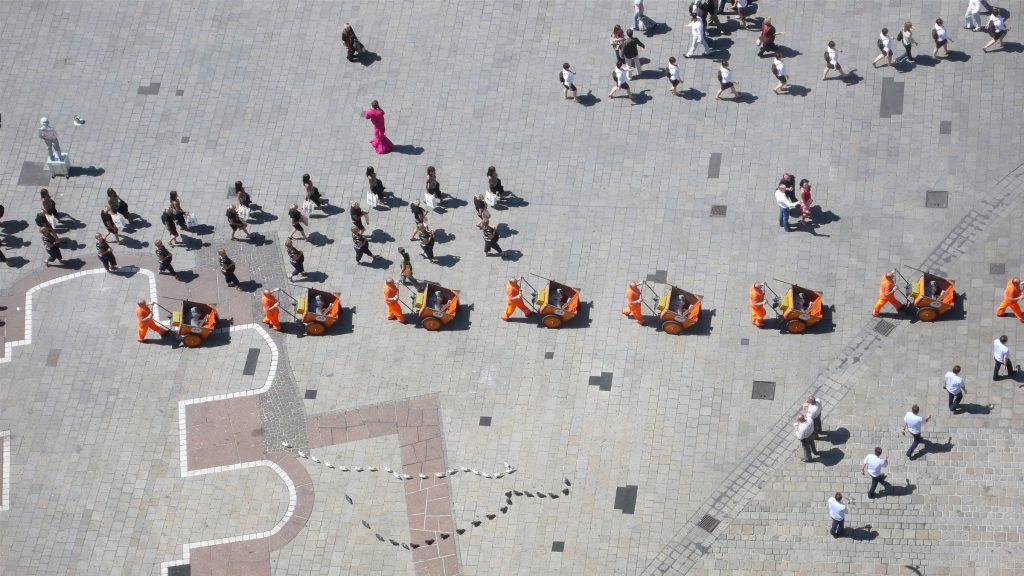
PlatzMenschen, Arbeit von Albert GehretPlatzMenschen

PlatzMenschen

2007 · C-Print auf Aludibond, UV-Matt kaschiert · 95 x 105 cm; 90 x 160 cm und auf Anfrage

Multiple photographs result in different narratives. There are a lot of copied people through time. But there is also a living statue-performing artist, that stays the same on every original photo.

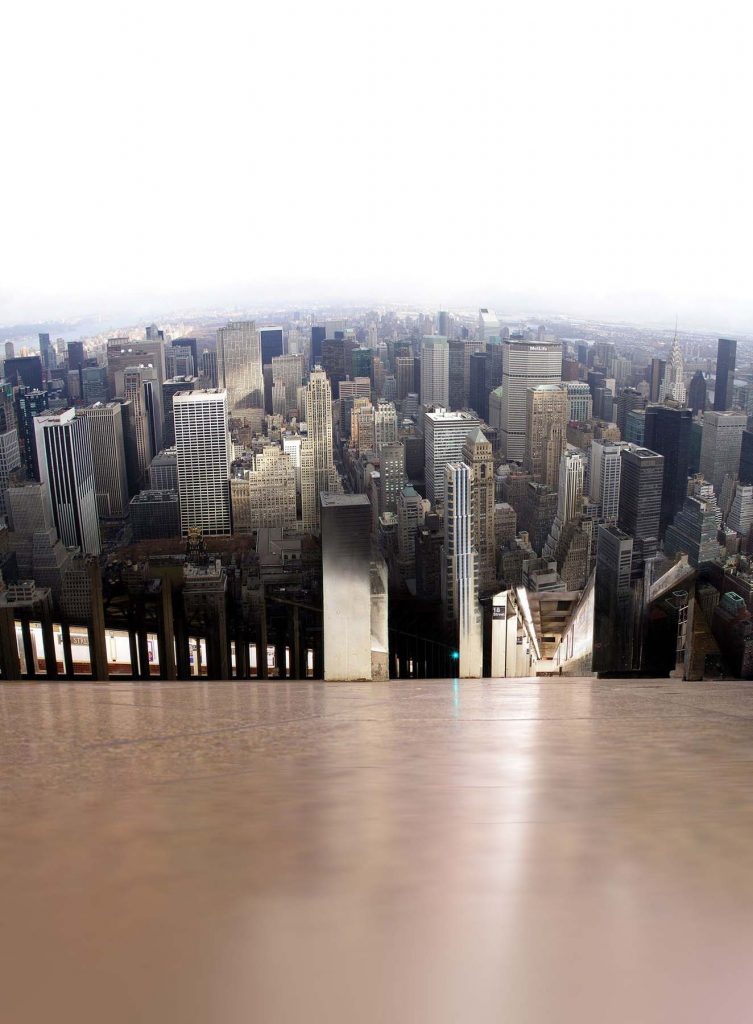
NYC-UpDown (InOut), Arbeit von Albert GehretNYC-UpDown

NYC-UpDown

2004 · C-Print · 60 × 90 cm; 100 × 70 cm und auf Anfrage

Up and down, here in New York, show how we are used to evaluate black and white: but if we do not look more precisely, we miss the "in-betweens".

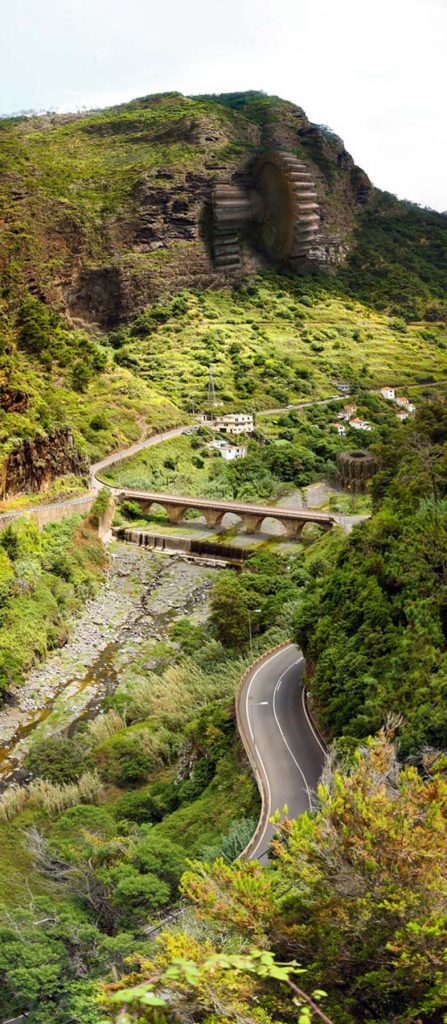
ZahnradTal, Arbeit von Albert GehretZahnradTal

ZahnradTal

2011 · Direktdruck auf Aludibond · 180 x 90 cm und auf Anfrage

ZahnradTal brings together photographic fragments of landscape and industrial forms into a spatial construction that initially appears coherent. The image follows visual similarities rather than physical reality: structures connect because perception allows them to connect.
What interests me here is how quickly the eye accepts a constructed whole when form, rhythm and perspective appear sufficiently plausible.

abbruchuebergang unzugeordnet 01, Arbeit von Albert GehretRippenWärme

RippenWärme

2026 · Ausführung auf Anfrage · Variable Formate

RippenWärme brings together two independently photographed architectural situations through a shared visual structure. Lines, proportions and rhythms continue across the boundary, allowing the eye to read separate spaces as a coherent whole.
The work explores how similarity can override contradiction: perception connects first, while closer observation begins to reveal the break.

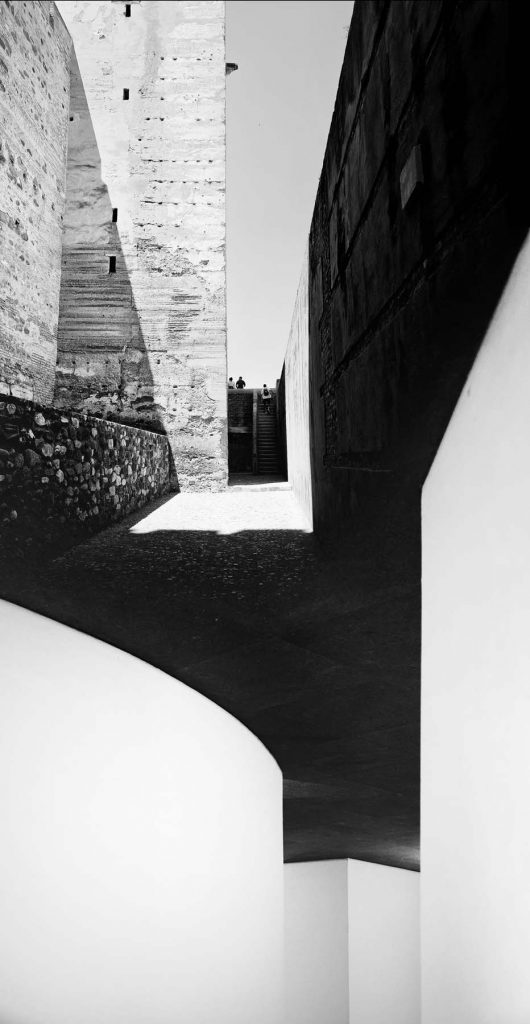
abbruchuebergang unzugeordnet 02, Arbeit von Albert GehretAlhambraMuseum

AlhambraMuseum

2026 · Ausführung auf Anfrage · Variable Formate

AlhambraMuseum combines two architectural spaces that were photographed independently of one another. Through perspective, proportion and structural similarities, they begin to form a seemingly continuous space.
The work examines how readily perception bridges a real break when visual relationships suggest coherence. What appears to be one place is in fact constructed from two separate realities.

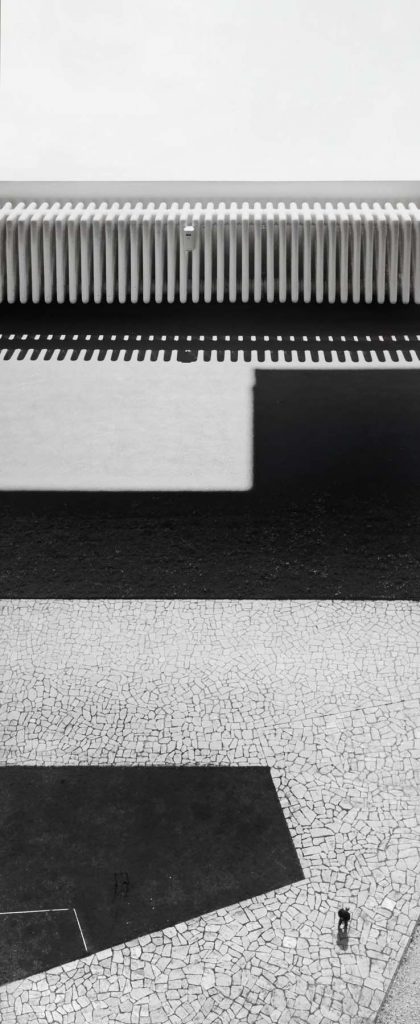
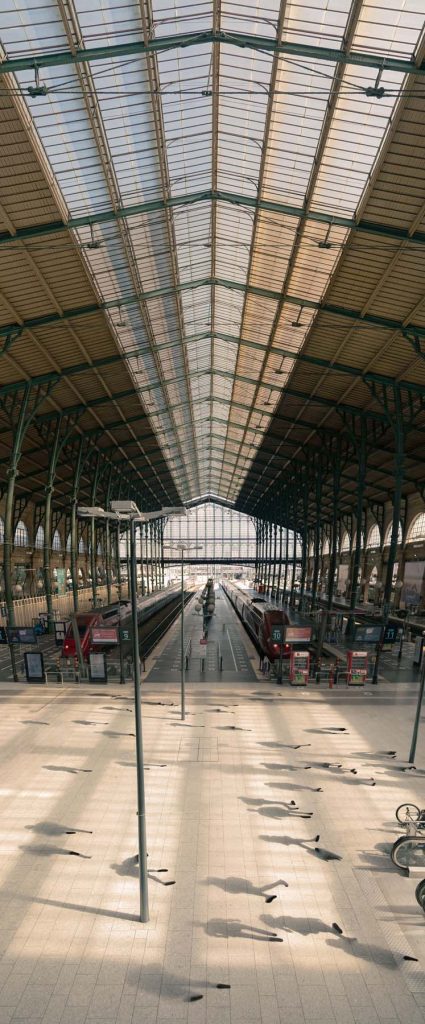
EntzugsSchatten, Arbeit von Albert GehretEntzugsSchatten

EntzugsSchatten

2026 · Aludibond, 4c-Druck, UV-Matt · 90 x 45 cm und auf Anfrage

EntzugsSchatten begins with a paradox: the people are absent, but their shadows remain.
By removing the figures while preserving their traces, the work shifts attention from what is visible to what perception reconstructs. The human presence is no longer shown directly, yet it continues to exist through its absence.
The work asks how little visual information is needed before perception completes what is no longer there.

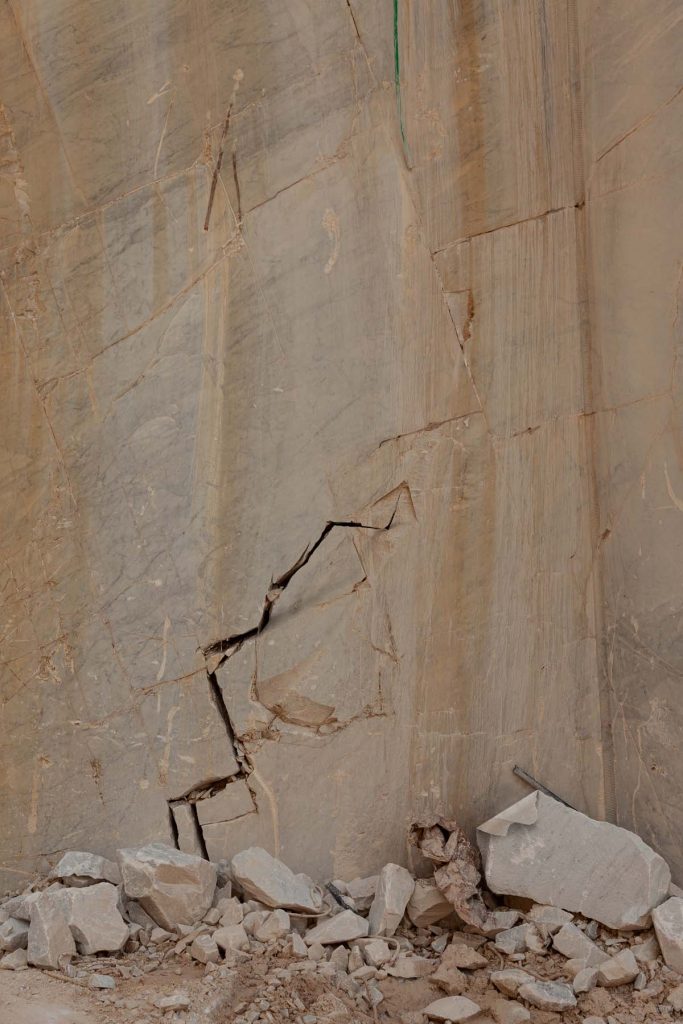
CarraraFaltung, Arbeit von Albert GehretCarraraFaltung

CarraraFaltung

2025 · Ausführung auf Anfrage · Variable Formate

CarraraFaltung transforms a photographic break within the stone into a fold. Two parts of the image meet along an artificial spatial edge, turning discontinuity into a seemingly physical structure.
Rather than concealing the break, the work gives it a form. What cannot exist as photographed space becomes plausible through the logic of the fold.